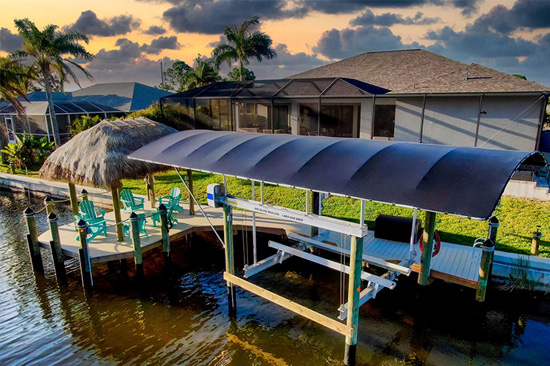
Comparing IQ Boat Lift Systems: Choosing the Right Lift for Your Dock

right boat lift image

Choosing the right boat lift is not about finding a single “best” option, it’s about understanding how different lift systems are designed to solve different waterfront challenges.

This guide compares boat lift systems manufactured by IQ Boat Lifts to help buyers understand how various designs within the IQ lineup differ based on dock layout, water conditions, maintenance expectations, and long-term performance needs.

This page is intended to support decision-making within the IQ product ecosystem and does not compare IQ systems to other manufacturers.
How to Use This Comparison Guide

Rather than ranking products, this comparison focuses on:

Design purpose

Operating environment

Maintenance profile

Structural considerations

Each IQ lift family is engineered to address specific conditions. Understanding those differences helps ensure the right system is selected for your waterfront.

Overview of IQ Boat Lift System Designs

IQ Boat Lifts manufactures multiple lift families to accommodate a wide range of dock configurations, water conditions, and boat profiles. Below is a high-level comparison of how these systems are commonly applied.
IQ Lift Systems Table
IQ Lift System Drive Type Typical Use Case Maintenance Profile Common Waterfront Conditions
Alumavator Vertical Lifts Chain drive Traditional vertical lifting Routine maintenance Docks with pilings
Platinum Vertical Lifts Direct drive Reduced maintenance Low maintenance Fresh or saltwater
Superlift Vertical Lifts Gearless cycloidal High-performance vertical Minimal maintenance Heavy boats
Alumavator Elevator Lifts Chain drive Vertical lifting without pilings Routine maintenance Seawalls, canals
Platinum Elevator Lifts Direct drive Low-maintenance elevator applications Low maintenance Tight footprints
Superlift Elevator Lifts Gearless cycloidal Premium elevator applications Minimal maintenance Heavy boats, seawalls
Beamless Lifts Direct drive Open walk-around access Low maintenance Shallow water
Deck (Platform) Lifts Direct/custom Side boarding, variable water Varies Fluctuating water
Trident Lifts Custom engineered Corner lots, angled docks Site-specific Irregular geometry
Marine Railway Lifts Track-based Shoreline access Site-specific Beaches
Titan Yacht Lifts Heavy-duty vertical Large vessels Engineered longevity Yacht applications
IQ Boat Lift Systems Comparison: For detailed specifications and capabilities, each system should be reviewed individually on its corresponding product page.
dock geometry image

Key Factors That Influence Lift Selection

Dock Layout and Structural Constraints

Dock geometry plays a major role in determining which lift systems are appropriate. Some properties allow for traditional piling-mounted lifts, while others require solutions that work without pilings or within tight footprints.

Water Conditions

Water depth, tidal movement, wake exposure, and bottom composition all influence how a lift performs. Certain designs are better suited for fluctuating water levels or shallow environments.

Boat Profile

Boat weight, beam, height, and center of gravity affect how loads are managed during lifting and storage. Lift systems are engineered differently to handle these forces.

Maintenance Expectations

Different drive systems and structural designs come with varying maintenance profiles. Some prioritize simplicity, while others focus on reduced service intervals or long-term durability.

Understanding Tradeoffs Within the IQ Lineup

Each IQ lift family represents a different balance of:
No single system is ideal for every scenario. Selecting the appropriate lift depends on matching the system’s design intent to the specific demands of the installation site.

When Professional Guidance Is Important

Because lift selection involves structural and environmental considerations, consulting with a marine contractor or IQ Boat Lifts representative can help ensure the chosen system aligns with:
This guidance helps prevent costly adjustments after installation.

Next Steps in the Selection Process

This comparison provides a high-level overview of how IQ boat lift systems differ. For deeper evaluation, the next step is to review individual lift family pages and discuss site-specific requirements with a professional.

Explore individual system designs to learn how each is engineered to perform in specific waterfront conditions.

Frequently Asked Questions

Q. Does this comparison rank IQ boat lifts by performance or price?

Ans. No. This guide does not rank systems or assign pricing tiers. It compares design intent and application scenarios within the IQ lineup.

Q. Is one IQ lift system better than the others?

Ans. Each system is designed for specific conditions. The best choice depends on dock layout, water conditions, and boat characteristics rather than a universal ranking.

Q. Can this guide help me choose between vertical and elevator lifts?

Ans. Yes. The comparison outlines how different systems are commonly applied, but detailed evaluation should consider site-specific factors.

Q. Should I rely solely on a comparison guide to choose a lift?

Ans. No. Comparison guides provide context, but professional assessment ensures the selected system matches real-world conditions.

Q. Where can I find detailed specifications for each system?

Ans. Detailed information is available on each individual lift family page within the IQ Boat Lifts website.