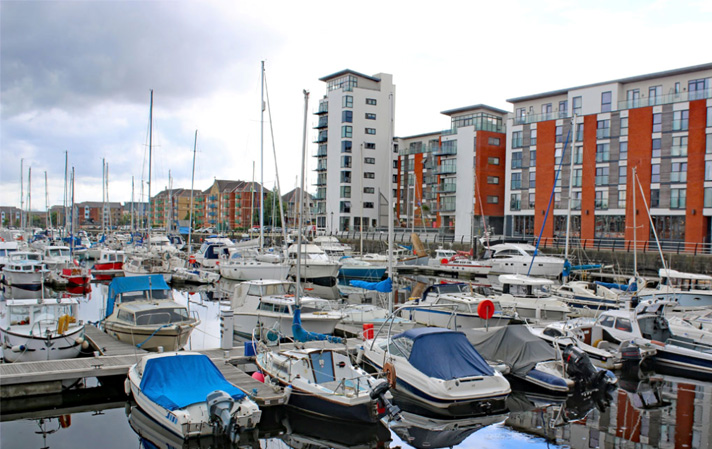
Marina environments place unique demands on boat lift systems. Unlike private docks, marinas experience higher traffic, frequent use, constant exposure to water, and a wide range of vessel sizes. These conditions make durability one of the most important considerations when evaluating boat lift systems for marina use.
Understanding what actually contributes to long-term lift performance can help marina operators and boat owners make better decisions and avoid premature wear, downtime, or costly repairs.
Why Marina Environments Are More Demanding Than Private Docks
Boat lifts installed in marinas operate under conditions that differ significantly from single-owner waterfront properties. Common challenges include:
- Frequent lift cycles throughout the day
- Exposure to saltwater, wake, and debris
- Shared dock infrastructure
- Vessels with varying weight, size, and usage patterns
Because of this, marina lift systems must be engineered for reliability under repeated use, not just occasional operation.
Durability Starts With Structural Design, Not Capacity Alone
While lift capacity is an important specification, it does not tell the full story of how a lift will perform over time in a marina setting.
Durability is influenced by factors such as:
- How loads are distributed through the structure
- Resistance to lateral and torsional forces
- How the lift handles off-center loading
- Integration with dock or piling systems
In high-traffic locations, lifts that manage real-world forces efficiently tend to experience less wear and require fewer adjustments over time.
Material Selection and Corrosion Resistance
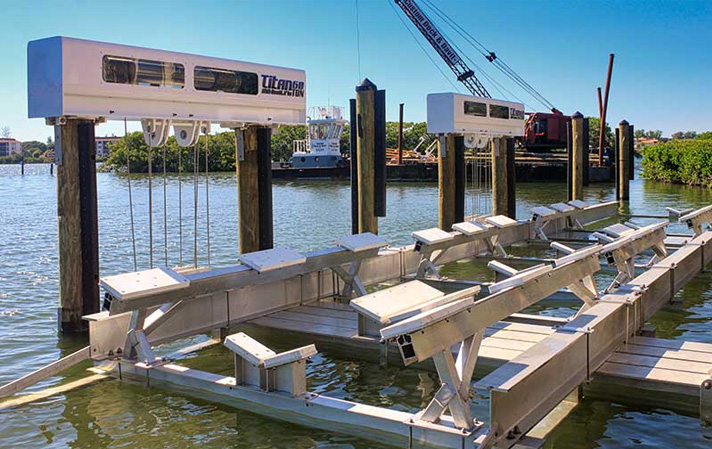
One of the most critical factors in marina durability is material choice. Continuous exposure to water — particularly saltwater — accelerates corrosion and material fatigue.
Lift systems designed for marina use commonly rely on:
- Marine-grade aluminum construction
- Corrosion-resistant fasteners and components
- Materials that minimize rust, deterioration, and galvanic reaction
These design choices help extend service life and reduce maintenance frequency in demanding environments.
How Maintenance Demands Change in Marinas
Maintenance expectations in marinas differ from those at private docks due to higher utilization rates. Systems that require frequent lubrication or adjustment can become costly and time-consuming when multiplied across many slips.
Durable marina lift designs often emphasize:
- Reduced moving parts
- Simplified mechanical systems
- Components engineered for long service intervals
Designs that minimize routine maintenance help marinas maintain operational efficiency while reducing downtime.
Space, Access, and Dock Configuration Considerations
Marinas must balance lift performance with dock accessibility and safety. Lift systems need to function reliably without interfering with pedestrian traffic, vessel movement, or neighboring slips.
Key considerations include:
- Dock geometry and spacing
- Clearance for walkways and boarding
- Compatibility with existing dock infrastructure
Lift designs that account for these constraints improve usability while maintaining structural integrity.
Supporting a Wide Range of Vessels
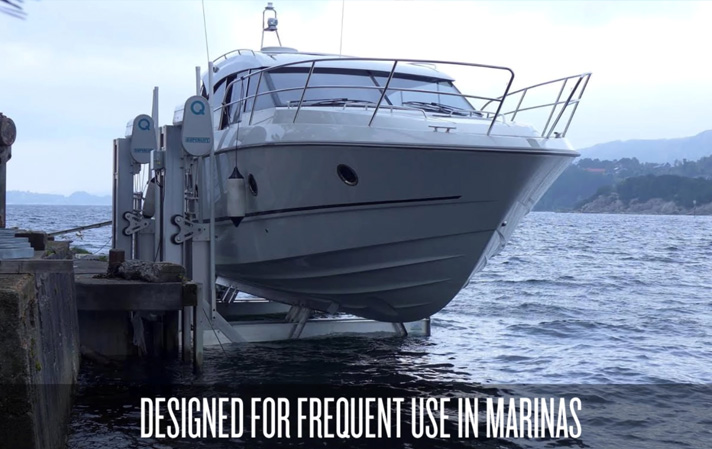
Unlike private docks that serve a single boat, marinas often accommodate vessels of varying size, height, and weight. This variability places additional stress on lift systems over time.
Durable marina lifts are typically selected based on:
- Consistent performance across different vessel profiles
- Stability under changing loads
- Adaptability to evolving marina needs
This flexibility helps ensure long-term value as marina usage changes.
Environmental and Operational Benefits of Durable Lift Systems
Using durable lift systems in marinas offers benefits beyond vessel protection. Keeping boats out of the water when not in use can help reduce hull fouling, limit chemical cleaning, and minimize environmental impact.
Well-designed lift systems also contribute to:
- Improved safety
- Cleaner marina conditions
- More efficient launch and retrieval operations
These benefits enhance the overall marina experience for operators and boat owners alike.
When Marina-Grade Lift Engineering Matters Most
Marina-specific lift considerations become especially important when:
- Lift usage is frequent or continuous
- Vessels are exposed to wake or wind
- Saltwater conditions accelerate corrosion
- Shared docks increase structural demands
In these scenarios, durability is not a luxury — it’s a requirement.
Final Thoughts on Boat Lift Durability in Marinas
Selecting boat lift systems for marina environments requires looking beyond surface specifications. Long-term performance depends on structural design, material quality, maintenance demands, and how well a lift handles the realities of daily operation.
By focusing on durability-driven design principles, marina operators and boat owners can protect vessels more effectively while reducing operational challenges over time. To learn more about how different lift designs address marina-specific challenges, explore educational resources on boat lift engineering and consult with professionals experienced in marina installations.
Frequently Asked Questions
What makes boat lifts more durable in marina environments?
Durability depends on structural design, corrosion-resistant materials, and how well a lift handles frequent use and environmental stress.
Why is corrosion resistance especially important in marinas?
Continuous exposure to water, particularly saltwater, accelerates material deterioration. Corrosion-resistant construction helps extend lift lifespan.
Do marinas require different lift designs than private docks?
Yes. Higher traffic, shared infrastructure, and variable vessel use require lift systems engineered for reliability under repeated operation.
How does frequent use affect lift maintenance?
More frequent lift cycles increase wear on components, making low-maintenance designs especially valuable in marina settings.
Can durable lift systems improve marina operations overall?
Yes. Reliable lift performance improves safety, reduces downtime, and enhances the overall experience for marina operators and boat owners.